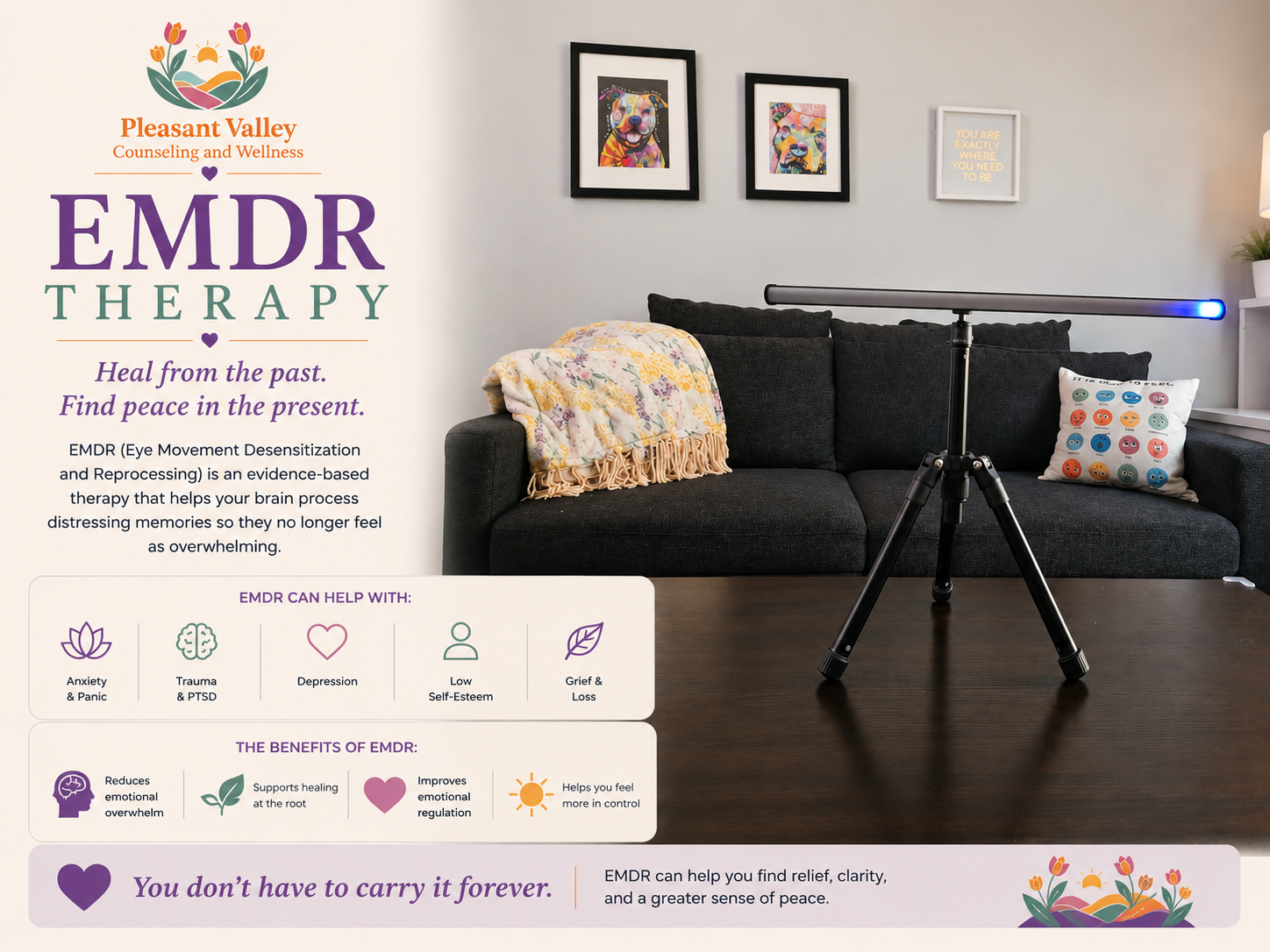
Eye Movement Desensitization and Reprocessing
EMDR is an evidence-based psychotherapy originally developed to help people recover from trauma and PTSD. It is now also used to address anxiety, depression, grief, phobias, and other difficulties that may be connected to upsetting life experiences. During EMDR, a therapist helps a person focus on distressing memories while using bilateral stimulation (such as guided eye movements, tapping, or sounds). The goal is to help the brain reprocess memories so they become less emotionally overwhelming.
Unlike traditional talk therapy, EMDR does not require extensive discussion of every detail of a traumatic event. Instead, it focuses on helping the brain process and integrate difficult experiences in a healthier way.
Some key points about EMDR:
• It is recognized as an effective treatment for trauma and PTSD by numerous professional organizations.
• It follows a structured eight-phase treatment approach.
• Research has shown it can reduce emotional distress associated with traumatic memories.